Local wheels for local food

It has been a big, big week for Eat Mendocino.  I baked my very first loaf of bread (after 5 1/2 years of being gluten free and a lifetime of not being a baker) the same day that the owner of the big local grocery store, Harvest Market, contacted us wanting to collaborate to get more local food on the shelves! Then, Gowan’s goat Mandy delivered twins on Mother’s Day. And, the very next day, Gowan adopted a third baby goat, which we snuggled while eating our first 100% local apple pie. She has since been aptly named, “Apple.” It’s a good, full life. *sigh*

Apple, Gowan's new dwarf nigerian baby goatSarah eating sourdough rye bread. Joyful disbelief.Sourdough rye bread for breakfast!Bakemistress Jacquelyn cutting the apple pie!

But, that is not what this blog post is about. This entry is about mobility. It has been a month and a half since I totaled my darling steel tank, Mrs. Butterwheels. I still don’t love talking about it, but it’s essential to understanding how my life is changing in deep and important ways. Time has passed, but I do not like being in cars, to say the least. I try to limit most of my activity within walking radius, and ride the bus or carpool when I really need to. Usually, this works. I have swiftly and resourcefully redesigned my life so that I can do most of my work from my living room, walk or ride the bus when I must get to the doctor or visit just-born baby goats. I’m learning to slow down, in profound ways. I am rethinking how much I really “need” to go somewhere, and am exploring the wonderfully dangerous world of online shopping (my shiny new bread knife arrived today!) There are flaws in all of these systems and choices, but it’s basically working out so far and the local diet has yet to be compromised, thanks to many benevolent agents who have delivered food in clutch situations.

Ironically, the main obstacle in this locavore’s life is my new gig as manager of the Mendocino Farmers’ Market. It is located approximately 7 blocks from my house, and you would think it’s the ideal job for a localized locavore. Yet, the only thing that has forced me behind the wheel of a car is my market manager duties. I have to lug tons of heavy signs around town before market day, and then bring all the gear for my booth every Friday (table, chair, paperwork, schwag, and the machine to accept Food Stamps, etc.). Thankfully I have many wheeled friends who have been helping me thus far, but I’m feeling far from autonomous and my favors are running out.

I have been fretfully wrestling with this conundrum for the past 2 weeks. I need wheels. But, I don’t necessarily need a car. The first thought was a large red wagon, at the suggestion of some of the other market managers. Which might work, but wagons are most efficient when used at the market itself. I need to schlep signs all over town, and then pick them up after a long day at the market. I need to cover ground, and not spend my entire Friday night doing so. The solution became fairly obvious.

As my favorite bumper sticker says, I realized it was time to, “Put the fun between your legs.”

I needed to outfit my bicycle with some kind of cargo cart! After some internet research, I have found the perfect thing: the Croozer Cargo Bike Trailer. It’s probably made in China, but it’s all part of the transitional economy…Croozer Cargo Bike Trailer

My market budget cannot afford this new expense ($200), so I’m inviting you, beloved fans, to help me get back on the “horse” and fuel a pedal powered local food economy. It’s easy, just click here to donate safely and securely via Paypal. Donations of any amount are deeply appreciated, from the bottom of my shaken but mighty little heart.

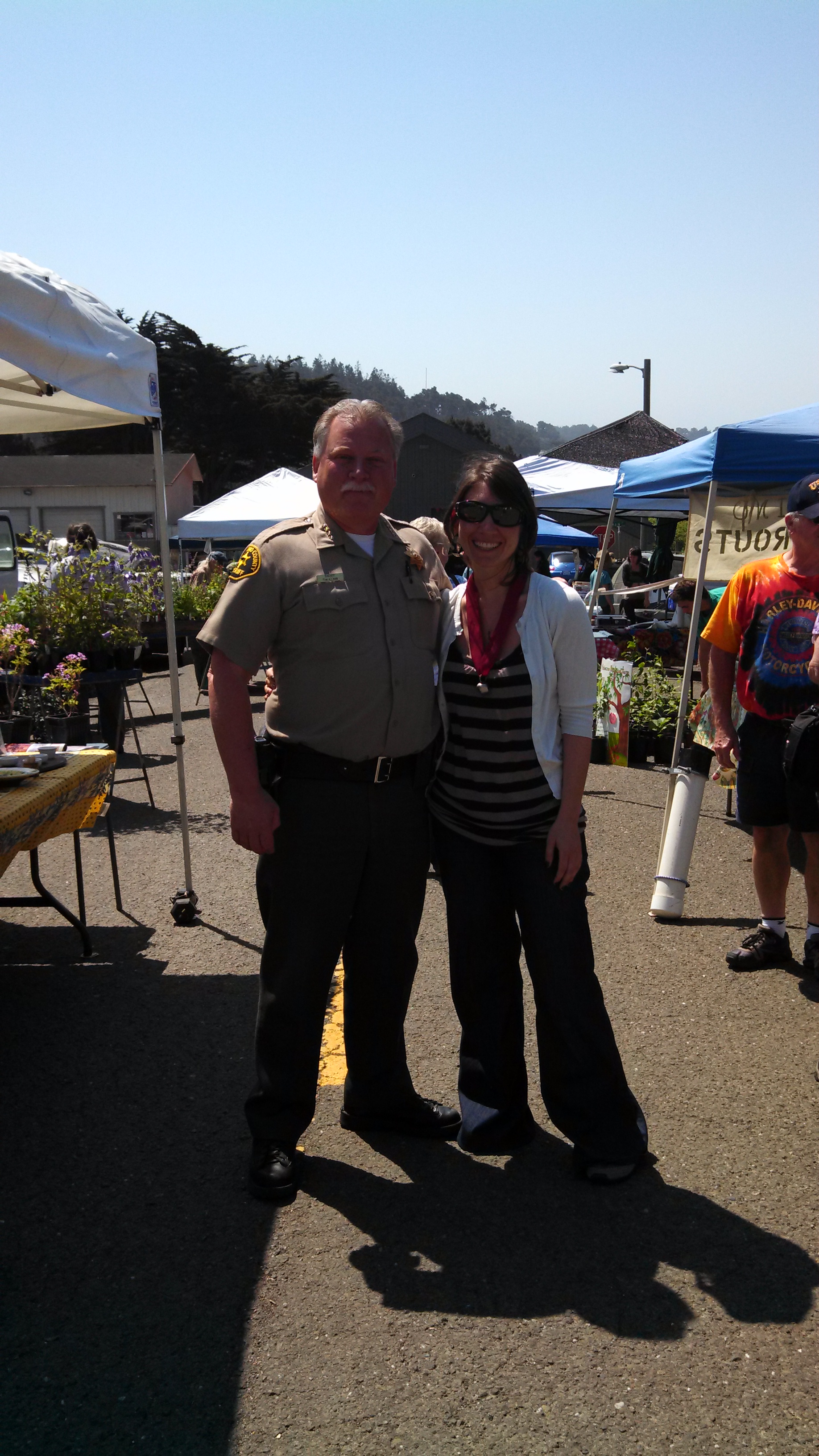
The market is off to a great start, and I know the season is going to unfold in wonderful and unexpected ways. Sheriff Tom Allman drops by for a visit at the Mendocino Farmers' MarketMy goal is to use it as a platform to get as many people excited about local food as possible! Sheriff Allman dropped by during opening day and purchased an apple tree grafted by the horticulture students at Mendocino High School. He invited Gowan and I to visit the County Jail’s garden, which has introduced locally grown food into the jail kitchen, allowed inmates to get their hands in the dirt, and reduced the annual food costs by $40,000! This is what it’s all really about. Do come by and say hi to me at the Mendocino market every Friday from Noon – 2 pm. You will find Gowan and her lovely produce at the Wednesday market in Fort Bragg from 3-6 pm.

And, if you need to see more baby goat pictures (because who doesn’t?), check out our Facebook page, and our YouTube channel.

xo
Sarah

Why I want to be a cowgirl when I grow up

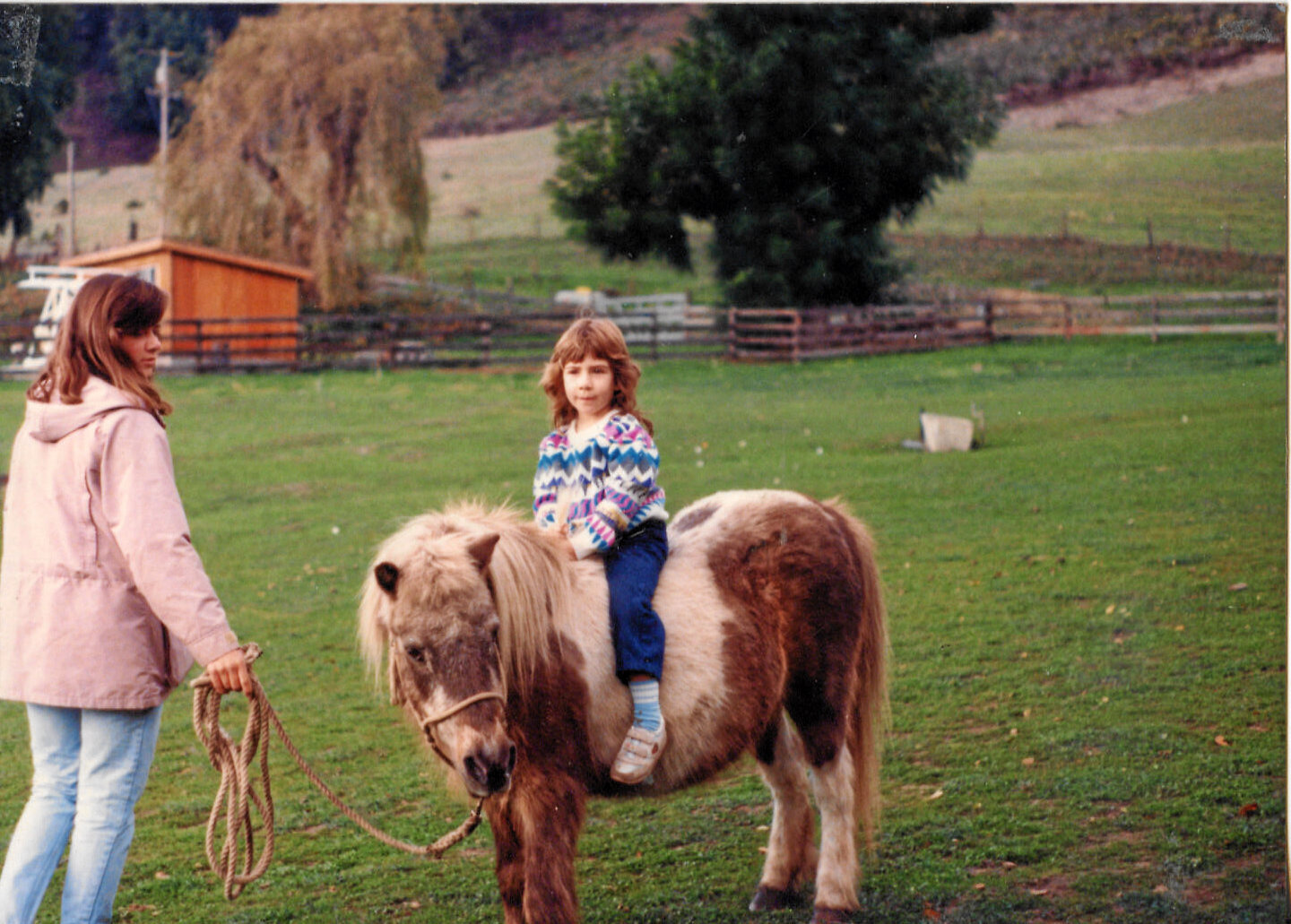
I was raised by vegetarian parents and I was never into horses as a little girl.Little Sarah on a pony I have rocked cowgirl boots for years while hugging trees and advocating for Fair Trade coffee, organic farming and sustainable logging. Now, in my late twenties I have become convinced that eating meat and becoming a cowgirl will help save the world. Maybe it was there from the start; don’t I look like a natural on this pony?

I have been wanting to write on this topic for awhile, especially since watching this TED talk by Allan Savory: “How to fight desertification and reverse climate change.” Savory’s story of working for conservation in Africa is a bit heartbreaking, but his findings offer hope for the entire planet. I recommend watching the video, but in short, Savory’s research demonstrates how the rotational grazing of herd animals can help restore the soil’s fertility and rebuild biodiversity in the vast deserts that we have created. This is a profoundly important and optimistic perspective on climate change; the technology is simple and available and the results are miraculous. I used to think I was looking for cowboy, now I’m just looking for a horse.

I decided to blog about this today after listening in on a live conversation as part of International Permaculture Day. Before I get to the meat issue, I want to say that I am a trained permaculturist and I love growing and eating plants and totally agree with Michael Pollan that we should all eat a lot more of them. And, I love my vegetarian parents a lot. I completely understand that some people are simply unwilling to kill another being for food for ethical reasons. However, I have some problems with the black and white discourse about raising and eating meat from an environmental perspective, and I think we should be looking at the issue in a more nuanced way.

Today’s conversation was between Craig Sams (founder of Green and Black’s Organic Chocolate and Chair of the Soil Association) and Satish Kumar (Editor of the Resurgence & Ecologist magazine and founder and Director of Shumacher College, International Centre for Ecological Studies and The Small School). Kumar began by explaining the three fundamental principles in his approach to ecological design and permaculture: soil, soul and society. I am totally with them as they discuss the complex beauty of soil science, the need to work from the soul and the importance of coming together as a community to garden and restore the earth.

Soon the conversation turns to the fact that we live in a predominantly meat eating and meat raising society. Kumar asks Sams to describe a sustainable diet from a permaculture worldview. They are both vegetarians, and they believe that reducing the amount of meat we eat as a species is critical to halting climate change. I completely agree that we must stop using 80% of the world’s arable farmland to grow corn and soybeans to feed to animals; the planet simply cannot withstand the strain from industrial agriculture. The masses need an absolute reduction in the amount of meat we consume and an increase in the amount of plant-based foods on our plates.

Sams explains that, “Trees can do a lot more to help the climate than sheep, or goats or cattle.” This is true if we’re talking about the industrial livestock system, but, there are other models where animals are part of a vital ecosystem. Then he goes on to quote Bill Gates’ endorsement of pursuing meat alternatives such as soy. Referencing Bill Gates doesn’t earn him any points here, as the Gates Foundation has championed a “Green Revolution” in Africa which unconscionably follows the same course which tragically failed India. Additionally, we have learned that soy isn’t actually a health food, especially in highly processed faux meat forms.

I’m way more interested in how we’re going to create localized food systems which actually work. Sams mentioned Nobel Peace Prize winner Wangari Maathai’s Green Belt Movement which has planted over 51 million trees in Kenya. She is one of my personal heroes and her advocacy is so impressive because her organization mobilized rural women to manage the land with their own hands to ensure access to water and food security in their communities. To me, this is what the permaculture perspective on sustainable food should be based upon. When discussing what we eat, I think it’s most important to consider ecologically responsible management of natural resources over any one dietary preference. This is what Savory has also found in Africa. In the great conservation debate, the people vs. nature battle was being lost until people were taught how to work with nature’s balance to rehabilitate the land so that they could farm it once again.

In the case of animals, I think it’s far more important that we look at the conditions in which livestock are being raised, slaughtered and transported around the world and choose options which feed, rather than destroy, the earth.

The soil is the skin of the earth and we are currently destroying topsoil at a fatal rate. Every farmer’s crop depends on the vitality of the soil, and the most efficient and sustainable way to maintain soil fertility is by integrating livestock into the farm and using their manure to build the soil. Show me an organic farmer who isn’t depending on animal poop to keep the soil rich. Nothing makes more sense than shoveling your own nitrogen right on the farm, rather than using bat guano or bonemeal harvested & processed somewhere far away and delivered by petroleum-fueled trucks.

If you’re ok with eating animals, I don’t think you need to become a vegetarian to save the world. My perspective is that the best thing we can do for the planet is get deeply intimate with all of our food sources. For the omnivores among us, I think the most important issue is to consider how our meat is produced, and get closer to the source. Some people advocate Meatless Mondays to challenge the obsession with meat. I completely appreciate the significance of encouraging people to go without meat one day of the week. Personally, I like to celebrate Meatball Mondays.  I say, eat your meatballs, but know your meatballs. By choosing the meat we eat more carefully, we will automatically reduce our meat consumption and lessen the negative impact on the earth.

In the last 4 months, Gowan and I could tell you where every single thing we ate has come from. This is probably the most impressive part of this endeavor to me. We can argue about the widespread scaleability of our approach when we look at the challenges in the modern food system, but I never said the solution would be easy. The good news is that everyone can participate in some way, starting right now.

Here are a few tips for getting intimate with your food:

  1. Eat out less, and choose restaurants that make an effort to source their ingredients locally and thoughtfully
  2. Shop at the Farmers’ Market. And say hi to Gowan on Wednesdays in Fort Bragg, and me on Fridays in Mendocino!
  3. Choose items that are in season when shopping (bananas are never really in season in North America…)
  4. When you are enjoying your locally sourced food, tell your family and friends where it came from and where you got it. Many people don’t even know that a local option exists.
  5. Arrange a visit a local farm. Most farms are delighted to have customers come visit, and this is by far the most fun way to know your food, and the people who produce it.
  6. If you want to eat meat, consider raising and slaughtering your own, or helping a farmer friend with their animals. I have raised chickens for meat and for eggs and it was an extremely rewarding process to be part of the cycle from raising baby chicks to putting them in the freezer. The closer we get to the food we eat, the more we value it, and the more accountable we are.

Rhapsody in Yogurt

I’m lucky for many reasons- I’m lucky to be surrounded by beautiful friends, I’m lucky to have such vibrant soil, (I run a wildly successful worm brothel and nightclub) I’m lucky to have the best partner imaginable, the best sisterwife, the best kid, the sweetest Bucket dog. I’m so blessed. And the foundation of all these blessings and mother hen of the collective Binky experience is my mom. No one could ask for a more supportive, thoughtful, lioness of a mother. And true to form, she wrote this blog in the middle of her busy schedule while she prepared to travel for a conference because she knows how busy I am in the week of our Earth day festival. Earth Day is really just a more expanded Mother’s Day, and since my mom is the collective mother of *all* the Binkies, read her words and let some real mama love wash over you.

-Gowan

Rhapsody in Yogurt

My girls will tell you that I am terrible with names, because it is true.  Rather than prolong the awkward pause caused when my mouth has to wait for my brain to catch up, I have taken to calling all of the beloved women in my life a generic “Binky.”  As the mamma of half the Eat Mendocino team (and honorary other-mamma of the other half), I sometimes have the great good fortune to sample to locavore genius of the Binkies.  Last week, one of the Binkies gifted me with a pint of freshly-made yogurt – perhaps from the same batch referenced in her blog entry on the subject.  Chuckling and muttering greedily, I hid the prized jar under my coat and scurried home, feeling like Fagan anticipating a particularly rich haul from the day’s pick-pocketing.

My husband and I ate the yogurt for Sunday breakfast with fresh, organic strawberries.  I opened the canning jar and surveyed the coveted treat that floated in a thin veil of whey with tiny, buttery flecks of clotted cream on top. It was the color of my grandmother’s flocked cotton bedspread – antique white.  As we dug in, bliss crossed our faces, and it was clear that this yogurt was superior to any manufactured product we had ever eaten – it was another food entirely.  To eat this yogurt required a pause, a reflection, a meditation.  I would go so far as to say that reverence was required.

Creamy and tart, at once delicate and corpulent, it married the berries and clung to them without feigning a blush.  There was a faint under-current of “cow-ness” to it, but not in a bad way – more as a tribute to the warm cow that had recently given it up for the cause.  It lent richness to the dish that I have never tasted in its poor, pasteurized cousins.

The pint disappeared in one sitting, leaving us fully satisfied and at peace.  It occurred to me that several cartons apiece of Yoplait would not have done the job of this gem in an old-school canning jar, made with love in a little oven by the sea.yogurt

Now, those who know me well will not be surprised that my rhapsody on a gift of homemade yogurt contains a political coda.  The longer I live the more intrinsic politics become in everything I observe.  Politics reflect our culture even as they drive it.  Our personal decisions become group mores that inform capitalism, which in turn builds machines designed to turn out dollars – machines that create unintended byproducts that carry consequences for all of us.  As the first-world agribusiness machine chews through the mono-cropped, genetically modified feed that will be given to our dairy cows along with plenty of antibiotics and rBHT, the sun looks on in horror.  Never before in the history of mankind have we laid waste the Earth so ferociously in order to feed all of us to bursting – and leave us malnourished.  We eat, and eat, and eat – and never before have we collectively been so tired, so fat, so diabetic, so neurotic.

Of course, we are only doing what we have been trained to do – we are part of the machine we have helped to create.  Just as seeds are tortured to make them pest-resistant and unable to reproduce themselves, so have our minds and bodies been tortured in the effort to make more and more dollars for the machine.  Our own basic human needs have been used against us.  Perhaps the only lesson I took away from my college marketing course was this astonishing factoid: the largest purchasers of psychological data and research are marketers.  That particularly insidious and heartless machine is designed to know more about us and our desires than we know about ourselves.

Processed foods are carefully engineered to light up the addiction centers in our brains.  The perfect balance of salt, fat, and sweet is carefully formulated to tickle the nodes that are hardwired to never be satisfied.  “Mouth feel” is a new area of extensive research and currently is considered an essential consideration for any new food product.  Don’t even get me started on packaging – the brain-blasting graphics and colors are designed to create the same primal response within us as observed in chickens trained to peck at a bright target for a pellet.

We have built a machine to please us without caring for us and fill us without nourishing us.  Worse yet, the chronic low-grade malnutrition has left us tired, fat, achy, isolated, and sad.  We have invented something other than food – something not-food, and we have over-tipped the scale until it is all that many of us can access.  The revitalization and even worse, the community, have gone out of food.  We sit alone in our cars at the drive-through, chewing and staring.

And that, friends, is why Eat Mendocino is going to save the world, and my precious Binkies are doing it.  Eat Mendocino is not the rod thrown into the gears of the machine; it is a dusty little chamomile plant blooming modestly beside the road, waiting to be noticed.  For those who do notice, it will help to restore our connection to the earth, to each other, and to our own spirits.  It is the only thing that can, and the Binkies are showing the way.  They would never say that about themselves, but then, that’s what mammas are for.

Am I implying that we all should drop out?  Shall we dismantle this machine at the expense of those who will be crushed by what tension is left in the springs?  Maybe those of us who are capable of doing so should consider it seriously, but the machine must be allowed to wind down slowly for those who are not and never will be so privileged.  If that is so, then the best we can do is to heed the friendly invitation of these young women: to do what we can, where we are, with what we have.  We can begin to identify those small things we can do in our sphere of control – a tomato plant, a duck in our garden rows.  The yogurt recipe seems entirely approachable to me.  Maybe I will try that soon. If nothing else, we can cast a kind eye upon the chamomile plant by the roadside.  Her tiny roots are creating cracks in the asphalt.

Happy Earth Day, my friends, with all my heart.

How to make real yogurt

In the natural division of labor in our domestic pact, I make the yogurt and Gowan makes the cheese. It’s largely based on equipment: I have a gas oven, and she has a dehydrator. But, I like my job a lot. It might have something to do with a genetic predisposition to yogurt (I am Greek after all). But, I like the many steps to yogurt making and find the process grounding and meditative. And, now I will share all my secrets with you. The thing about making yogurt, and making most things really, is that none of it is very complicated. It just requires a few simple pieces of equipment and good timing. You can’t let the milk go bad, make sure you don’t run out of starter, and make the time to get it going and also be sure that you will be available to take it out many hours later. (I have ruined yogurt due to late night escapades…) So, it is really an act of being present more akin to meditation than cooking. But, maybe they are one and the same. Making yogurt is also a lesson in freedom.

There are lots of different ways to make yogurt. I’m not an expert, this is just the way I do it and I think it reliably makes damn good yogurt. Gowan agrees. Wild FermentationI learned from the book Wild Fermentation by Sandor Katz – which is a fantastic resource for all things cultured and fermented. I don’t have a yogurt maker, but I’m not opposed to using them – I just don’t have one and don’t seem to need it. So here it is:

Equipment:

  • A sauce pan or small/medium soup pot – sized according to how much milk you have and yogurt you want to make
  • A gas oven – this is important for this method. If you don’t have a gas oven, you will need to find another way to incubate the yogurt at a steady temp (like a yogurt maker). Some people put it in a cooler, wrapped in towels, next to bottles of hot water. The oven is just easy and the temp seems to stay steady.
  • A candy thermometer
  • Whisk or rubber spatula
  • Mason jars – I like the wide mouth quart or pint sizes for yogurt making
  • Ice and a sink or large bowl for making an ice bath

Ingredients:

  • Cow Milk. We are lucky to have fresh milk right from the udder. You can use any kind of milk – store bought, Organic, rBGH free, but we strongly recommend using whole milk – always. I have ranted about the integrity of whole milk in another post, so I will not belabor this point here. It is possible to make yogurt with other kinds of milk, but cow is what we have, so that’s what we’re using right now. It’s true that all milk is breast milk, and we recommend getting as close to the breast as possible. It really will taste better.
  • A little bit of yogurt for starter – this can be from your last batch, or from the store, or from a friend (which is my favorite place to get it). You don’t need much, but we’ll get into that later.
  • That’s it!

Directions:

  1. Pour milk into saucepan, insert the candy thermometer and begin to heat on low to medium low. Stir frequently. Do NOT let the milk burn. That is your number one priority. I post up next to the stove and try not to leave it, because I burned it once and I will never let that happen again. Burnt milk = gross yogurt.
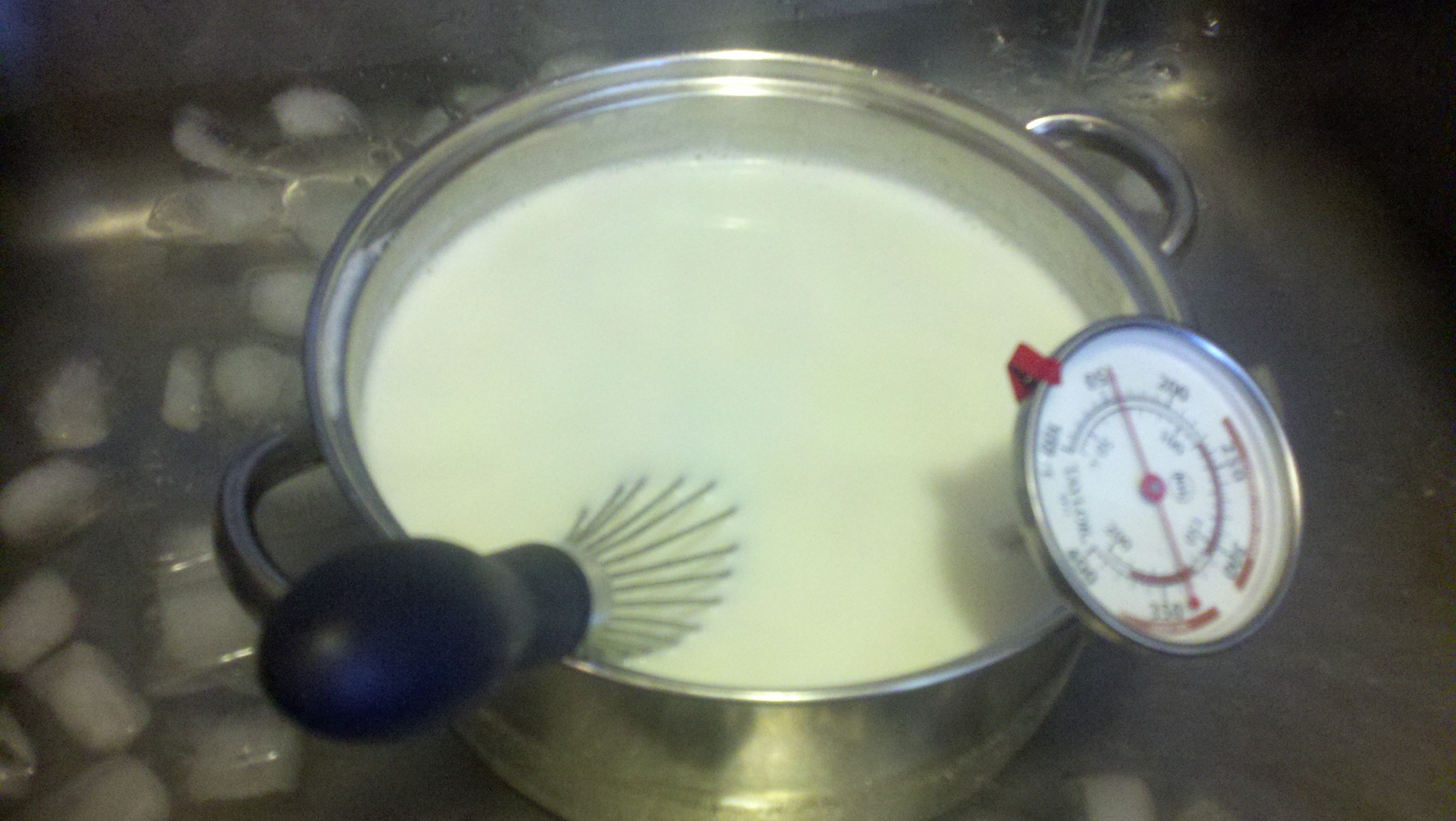
  2. Keep stirring diligently until you raise the temp of the milk to 180 degrees. Stirring keeps it from burning and keeps the temp even throughout the pan.
  3. Prepare an ice bath. Once the milk has reached desired temp, turn off the burner. Place the pan in the ice bath and allow the milk to cool to 110 degrees, stirring occasionally so it cools evenly as well.Yogurt in an ice bath
  4. Turn the oven on to the lowest setting for a few minutes while you complete the next step.
  5. Pour the cooled milk into the mason jars and then stir in the starter. Yogurt in jarsYou need way less starter than you think – only 1 tablespoon per quart. I learned this from one of my favorite cooking quotes of all time, found in Wild Fermentation and borrowed from the Joy of Cooking. (P.S. I just added Joy to our Wish List b/c I don’t actually own a copy which is unbelievable, yet true.) Ok, so this is why yogurt is all about freedom:

    “You may wonder why so little starter is used and think that a little more will produce a better result. It won’t. The bacillus, if crowded, gives a sour, watery product. But if the culture has sufficient ‘Lebensraum’ [German for ‘room to live’], it will be rich, mild, and creamy.”

  6. Turn off oven, and then place jars on oven rack for incubation. The oven will retain warmth from pre-heating it, and the pilot light will keep it warm enough for the cultures to get happy and do their thing. Try not to move the jars at all once incubation begins – it makes the yogurt unhappy.
  7. Leave yogurt in the oven for 8-12 hours, depending on desired thickness – or when you remember to take it out! I like to do this in the evening so that there is fresh yogurt in the morning – which is the best thing ever (and so that my oven isn’t occupied during the day).
  8. Remove and enjoy straight out of the jar! If you are Greek like me, or just have really good taste, you may want to strain your yogurt to make it even thicker. To strain it, you line a colander with cheesecloth and place in a bowl. Pour in the yogurt and let it sit in the fridge overnight. The whey will separate, making your yogurt even thicker, creamier and more delicious than it already was. Save the whey for other cooking uses. This is what I do when I have the patience to not eat it right away.

Eat Mendocino in the Real Estate Magazine

Dear readers,

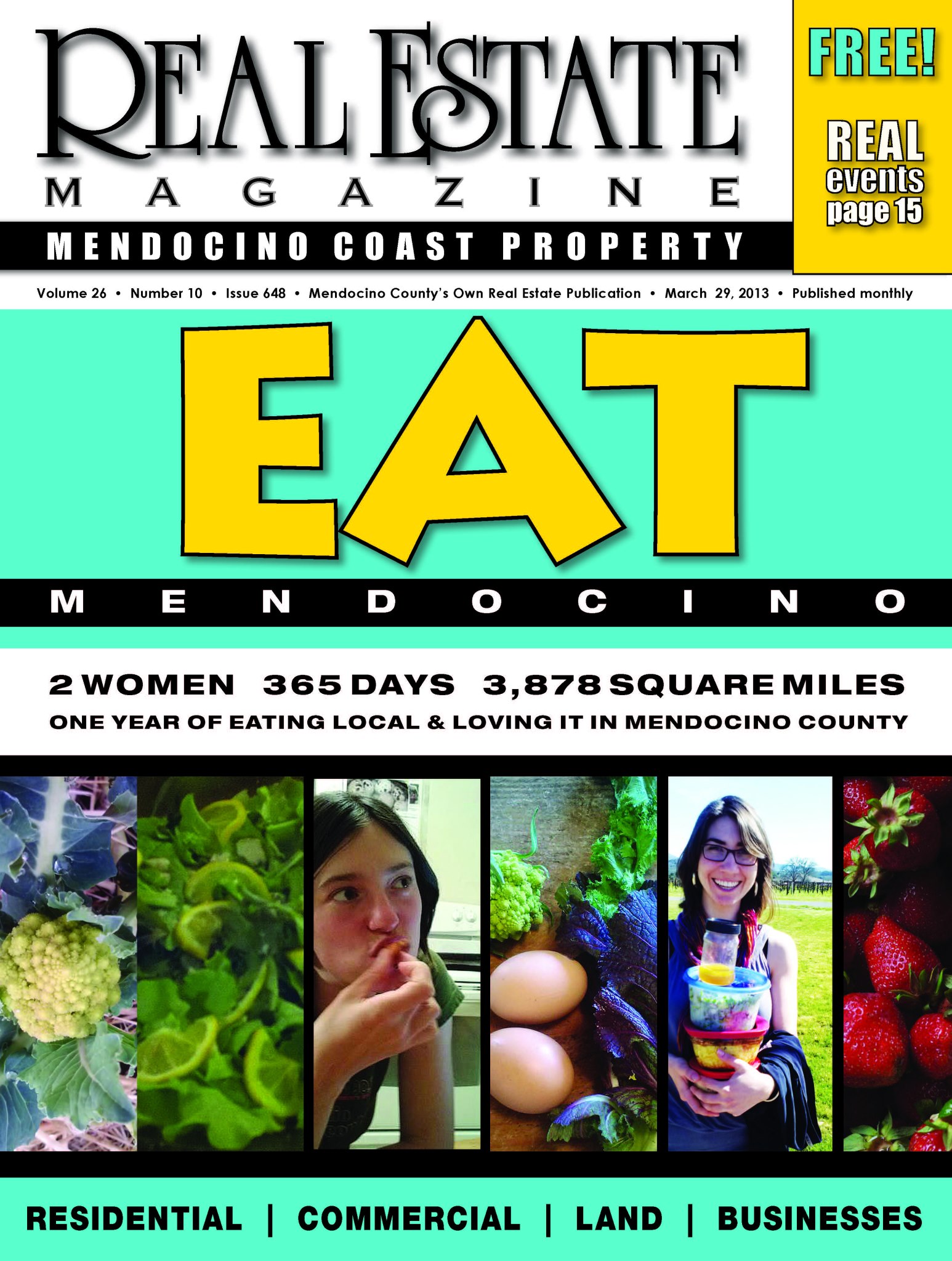
I know, it’s been awhile. Last month I used up all of my words writing this article for the Real Estate Magazine, which defies its name to feature local human interest stories. I was excited to be invited to write the cover story for last month’s issue and it’s created a real buzz around town. I can’t go anywhere now without someone mentioning the article; even my physical therapist brought it up while doing an ultrasound on my right hip last week!

Publishing this article made me realize two things: 1) The interweb is miraculous, but it’s really nice to be able to put something in someone else’s hand. Print media is so not dead. 2) We need to write, write, write. I have mega guilt about not making enough time to tell you all about our project because we are too busy doing it. And that is totally counterproductive.

The whole point of this eat local experiment is to share the journey along the way. I was recently in a gamechanging car accident and it has made me realize one thing quite clearly: it’s time to slow down. No more living the “slow food” life in the fast lane. We need to make time to live and eat local, and also time to tell you all about it. So, that is my promise. More soon. For now, if you haven’t read the article, yet, you can download it in PDF form or read the text below.

Eat well and drive safe.

So much love,
Sarah
Real Estate Magazine Cover

Eat Mendocino: An adventure in eating local in Mendocino County

2 women, 365 days, 3,878 square miles

By Sarah Bodnar

A few weeks into this year, I found myself in the First Aid aisle at CVS, completely dumbfounded by the Band-Aid selection. A kitchen accident had resulted in a gnarly flesh wound to the thumb and I needed a protective layer between my hand and the world. I thought there were two kinds of Band-Aids: the soft fabric ones and the plastic ones. I like the soft ones. Simple, right? Not simple. Niche marketing has hit the Band-Aid shelf; the selection stunned me. They now come in every texture and shape, and in variety packs that make you question whether any one Band-Aid could possibly meet every human need. I spent over fifteen minutes studying the wide assortment of bandages that I might need for a host of unforeseeable injuries at some point in the unknowable future. Feeling defeated, I finally settled on a variety pack, sans pre-applied antibiotic cream.

This little errand exposed deep realizations about my changing relationship with “stuff.” It was less than a month into our food project, but radically modifying my decision-making process around food had recalibrated my entire life – and it couldn’t be more unlike the Band-Aid aisle.

A year of eating local

On January 1st, 2013 my friend Gowan and I embarked on a year of eating food that is grown, raised and foraged in Mendocino County. We made a choice to know where our food came from – all of it. We chose to commit to this place we live and love. We chose to feed directly from the land and sea and live by the seasons. Ultimately, we chose to make life more complicated for the sake of simplicity and signed up for a year of uncompromising limitations to open the door to abundance.

We chose to do all of these things out of graceful optimism and bull-headed stubbornness. Fundamentally, we knew we could do it. Gowan is a farmer and a maker of all sorts of things, from gorgeous compost to fine silver jewelry. I am a lover of food, professional dot-connector and a media machine. Together, we are some kind of home-grown DIY girl farmette with hundreds of online fans. Our goal is simple: to live off the land and the sea, and love it. It is also our goal to inspire a new agricultural future, celebrate abundance and build as much topsoil as possible.

Emptying the cupboards

In the weeks leading up to the New Year, I cleared out my pantry, fridge and freezer, purging anything and everything that wasn’t grown, raised, or foraged in Mendocino. This meant that there was almost nothing left. I had not been freezing, drying, canning or preserving anything in preparation for this mammoth undertaking. I only decided to join Gowan in this adventure a week before Christmas! I gave away five bags worth of groceries, all of my spices, and my entire beloved tea collection as Christmas gifts.

A few items made the cut in my pantry: seaweed and herbs I had harvested and dried last spring, locally harvested sea salt, apple cider vinegar, a bag of frozen huckleberries, dried fava beans and some local duck eggs. Otherwise, my shelves were filled with a lot of empty mason jars. Heading into the New Year, I knew we were a far cry from food security. It was the leanest time of year and my cupboards and fridge were largely barren. I’m not sure if this winter dearth was more or less terrifying for my sister-wife. On one hand, she had a few hoop houses that were still yielding tomatoes and hot peppers at the first of the year, plus lettuces and mustard greens and all the tree collards we could eat.  As a farmer, I imagine she was also acutely more aware of how much we had not planted and stored for the winter months, and how long it would be before the ground started to warm again. So, the first lesson was that you must clear out the old to make space for the new, and have faith that you will not starve in so doing. Our mantra instantly became, “Start where you are, do what you can, with what you have.”

The Rules

The first step was defining the boundaries of our project, and what “local” would mean to us. There are many different functional definitions of local food, usually based on the distance that the food has traveled. Our goal is to discover the food abundance within the borders of Mendocino County, so we are only eating food that is produced in Mendocino County. Thus, the project is aptly called, “Eat Mendocino.” This means we grow, raise, pick or catch it here, or get it from someone else who does. We don’t have any Barbara Kingsolver-variety exception foods or “get out of jail free” cards; we are 100%. We will survive without coffee, tea, chocolate, coconut water and avocados for 365 days (with smiles on our faces!). We wrote the following rules at a bar the week before the project began and they are posted on our website, so that the world may keep us accountable:

  • We eat locally produced food, not locally processed food. So, if the inputs aren’t local, we don’t eat it (coffee, tea, mustard, beer, jam, and… ice cream)
  • We are not making exceptions for staples such as grains or oils. Some of those things grow here, and those that don’t will not be staples for us.
  • We will not use spices, sauces or flavorings that made with ingredients produced outside of the County. This is where it gets real.
  • If we are traveling or happen to be outside of the county, we will be 100% committed to eating food that is locally produced in that place, as close to the farm or garden as possible.
  • Our first priority is to produce as much food for ourselves as we can and source the rest directly from the farmer, rancher, fisherman through barter and exchange. We will also support local grocers that sell locally produced food.

The hunt for local food

Food is our clock, time revolves around its procurement, processing and preparation. This involves frontier land resourcefulness and a lot of dishwashing. A couple weeks ago I saw a bumper sticker that said, “I don’t buy food from strangers.” That’s probably the simplest way to describe the parameters of our project. Our survival now depends on knowing our community more intimately than ever before. There is a simplicity to our meals because we start with what is available and work from there. Each plate is also a complex web of relationships between people and the land. We can trace these connections item by item, meal by meal. I realized one day in January that I knew every single thing that I was putting in my body. I knew we were going to get really cozy with our food, but this is an impressive reality to live. There are no hidden sources, no unknown preservatives, nor any un-pronounceable ingredients.  Nothing but real, whole foods with a story.

There are many people to thank for our survival. We would not be alive without the one hundred and fifty pounds of potatoes we got from John Richardson at Noyo Hill Farm. John and Charline Ford’s grass-fed beef has been keeping meat on our bones. Gowan’s Oak Tree farmstand in Philo is making life much sweeter, with their well-stored apples and dried pears, peaches and persimmons. We also love the local stores that make a point of stocking local products, which are surprisingly hard to come by. For this reason, Scott Cratty is our hero. He is the owner of Ukiah’s most revolutionary corner store. He has filled the shelves with 100% local produce, and introduced us to many local treasures such as Pennyroyal Farm cheese, McFadden Farms dried herbs/spices and pistachios from Calpella! In Scott’s words, “Mendocino County is the place where your next door neighbor is doing the coolest thing that you will never know about.” Word. Never has it been more important for us to know our neighbors.

Through the process of sourcing food, strangers have become friends, and we are awed and humbled by the kindness of our community. People have shared with us so many items out of their own freezers and pantries, including goat and pork meat, dried peppers, seaweed, salt, corn, flax seed, quinoa and wheat. It truly does take a village to feed a locavore; we are always accepting donations, so let us know if you would like to feed us or show us your favorite fishing spot!

To juxtapose this with the current food system is a stark, astonishing contrast. We live in a world where food is largely divorced from source. Even for people like me who generally eat healthy and shop at the Farmers’ Market, taking it to this level is completely gamechanging. Much of what we eat has changed hands many times, is highly processed and packaged, and the production and distribution of these green-er foods is fueled by petroleum. While it may come in a recycled paper box, printed in soy ink and bears an organic and Fair Trade label, much of your food probably comes from really far away. This is inherently unsustainable, and will only prove to be more so as the cost of oil increases. As we have un-globalized our own diets, it has been fascinating to strip away the many layers of the current industrial food system and start exploring what it would take to go back to the old ways, in a new way.

Filling up

Even in the darkest of the winter months, we have been well fed. We are fortunate to live in a temperate climate, where kale grows wild on the headlands, and mushrooms spring up from the forest floor. We began the year trusting that we would survive, but without knowing exactly how. There have been rough spots – especially in the beginning. I still remember the unparalleled joy of picking up our first load of milk and butter on Day #5. I learned quickly that the local diet is inherently low-carb, and had to start eating unladylike servings of potatoes to keep weight on. My body tells me what it needs. When I need fat, I unabashedly scoop the cream off the top of the milk jar. I drown everything in butter. I drink wine when I could use some extra fruit calories. Sometimes I eat honey right out of the jar with a spoon. We have to listen to our bodies, and constantly balance our physical needs with the seasons.

We have also gotten pretty good at asking for help, and been blessed with so many acts of kindness in the form of food and fishing poles. Over the last few months our diet has included a lot of kale, meat, milk, potatoes, apples, butter, eggs and bone broth soup. Sometimes we eat meals fit for queens, and sometimes, it is, well totally gross. But, usually it’s really, really good. Often when I feed my friends, they say it is the best milk, orange, beef, cheese, etcetera that they have ever eaten. The paradox of our lives is that opulence and indulgence springs forth from scarcity and compromise. After days of eggs, potatoes, cabbage and kale, suddenly we are eating lemon meringue pie or enjoying a full Thanksgiving style feast on a Tuesday night in February because a thirty-pound turkey unexpectedly thawed due to a power outage. Other times, we are trying to figure out what to do with twenty five pounds of ripe kiwis. And sometimes I am cracking walnuts open with a hammer and sipping champagne.

Jar by jar, the pantry has filled. And emptied. And filled again. Food flows in and out of our lives in a tidal wave of bright colors and textures. We cannot afford to stockpile, and there is a newfound comfort in this rhythm. In three months, we have seen that every empty jar is an opportunity and that using things up is the best way to invite abundance – simply because there is no other option.

The fruits of our labors

I have long believed that preparing food provides nourishment beyond taste and calories. Sometimes I will spend an hour cooking a meal and by the time it’s ready, I already feel satiated. This, I believe, can be explained by the Ayurvedic perspective that we must experience our food using all five senses. When we are intimately connected with the entire process of our food chain, the rewards are unsurpassed. Case in point: I would argue that nothing can make goat cheese taste better than snuggling just born baby goats.

There is another aspect of the locavore life that has nothing to do with the food itself; it’s about money. Every time we purchase food from local farms, ranches and dairies, we are investing directly in the local economy. We are keeping money circulating here at home, rather than subsidizing international companies to feed us. It’s an efficient closed-loop system: by eating locally we actually build local food security – and the ROI is delicious! It is one of our goals to highlight all of the inspired farmers, young and old throughout this county who are committed to feeding the people, supporting biodiversity and building topsoil. This was once a county that grew enough food to be food secure. It is now a county whose two main crops are not food. Supporting these farms is supporting a new agricultural future, so you can have your local bread and your wine, too.

I have never been so involved with my food, nor so governed by the natural cycles of the seasons. The most challenging part of the locavore lifestyle has been finding balance between feeding myself and doing everything else. There is no going “back to the land.” I am living with the land, and also running my own consulting business, organizing community events and trying to rekindle my relationship with my yoga mat. Life cannot stop and the dishes must be done.  The truth is that it is extremely challenging and also naturally easy all at once. We have had to invent new efficiencies, modify our schedules and lives and remove things that simply don’t fit. There is little margin for error, no out clause when you have a busy day or didn’t have the foresight to pack food, just don’t feel like cooking, or have been taking down by a ruthless flu. Days like these, it is really good to have a sister-wife. It gets easier with every month, and as the air gets sweeter with the scents of spring the ground warms and promises much goodness to come. My skin looks great, my body feels awesome and I now do dishes as a form of meditation. It’s hard to believe that we’re almost a quarter of a way into this year. I am humbled and moved by people who tell me that this quasi-insane undertaking has made them look at their own dinner plates and think about where their food comes from. We are encouraged by all of our blog readers and Facebook followers who are learning and laughing with us. In the next episode of “It might be totally gross,” I am going to attempt to learn how to bake (without using baking powder) with our monthly shares of freshly milled wheat & rye flour from the Mendocino Grain Project – after being gluten-free for over four years.

When there is flour, you learn to bake bread. This is how it works; food determines life now. Meals are created with what is available, in the time we have. Our plates reflect our landscape and every single thing we eat can be traced back to the hands that grew it, raised it or picked it. The feeling I had in the Band-Aid aisle really had less to do with all the options, but of the alienation that we experience as normal part of everyday life. Nearly unlimited options are presented to us in the Band-Aid or cereal aisles, making us feel like we are choosing. Yet, somehow we usually end up feeling somewhat defeated by trying to find what we really want in a box. Because maybe what we’re looking for isn’t merely, but connection. This year is fundamentally about reconnecting. As we connect the dots in the local food system, we are building profound new relationships with the place we live and love and the people who are stubborn enough to farm here. We have redefined choice; by embracing limits we have opened ourselves up to an existence that is more deeply satisfying and delicious than I could have imagined.

morning of our Farm to Table Dinner

This evening we’re feeding dinner to the community. We hope you’re coming!

Today will be a lot of rushing around, coordinating harvesting, picking flowers, laying out the jewelry I’ve been making, and watching our beloved chef Matt glide around unconcernedly deciding what he’s going to make out of the mountain of local food we’re assembling.

0402131447b

You guys, we have amazing local food. Look at that cheese!

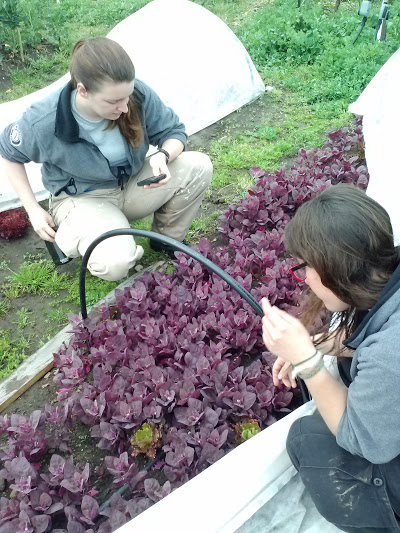
0402131008I’ll be bringing my greens mix some of you might remember from the Caspar market- the above is my saved seed strain of purple orach, with a couple of our Americorp volunteers who will be joining us at the dinner.

0402131452

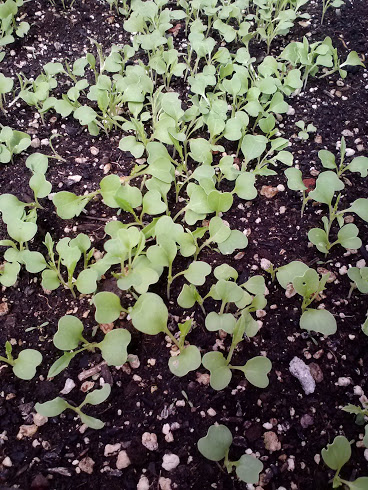
Baby greens are ready to be picked, hens have been hard at work laying, goats have been milked in the cold spring mornings, our local farmers have joined together to share what they create so that we can all have dinner, 100% Mendocino county in origin.

I have to go rush around now, hope to see you later. If you haven’t gotten your tickets yet, there will be some for sale at the door, and the dinner is at the Caspar Community Center tonight at 6:30 p.m.

Loves,

-Gowan

April

I’m sitting in my kitchen on Easter Sunday, watching steam uncurling from under the lid of a massive stock pot.

Tomorrow it’ll be lunch for the Americorps team that will be spending the next two months at the farm. I’m about to be swept into the whirlwind of Earth Day, endless planting, goat birth, milking, quail laying, chick nurturing, all the good stuff. The rain’s been coming down all day, the weeds are growing, the snails are rejoicing, spring is upon us. Everything is swelling with life.

This is usually kind of a tough week for me. My first love died on April 5th, 2006. Every day I let him go a little more, and every day the earth gives him back to me in some small way, by reminding me of his sense of symmetry, his grace, his frank practicality, his integrity and his sharp humor.

T.S. Eliot runs in a quiet loop in my head this time of year, the words re-combining themselves until they lose meaning, becoming a litany or a chant;

“April is the cruellest month, breeding

Lilacs out of the dead land, mixing

Memory with desire, stirring

Dull roots with spring rain.”

Its a tiny fragment of a huge, all encompassing poem, its opening stanzas, 1. The Burial of the Dead.

It might seem strange to begin with burial, unless you happen to be a farmer. When I plant my next crop of lettuce is when my previous crop is just coming into its own, the rosettes filling the curved beds with painterly swathes of color, seeming perfect and without end. We have to live in time; looking back to what we planted last year and the year before that, what went into the soil, and what worked and didn’t, we have to pay attention in the moment to the immediate needs of the farm, the way plants are reacting to the current weather conditions, and how the needs of the people we feed are being met, and we have to live in the future, seeing the seed and seeing the plant and seeing the compost the plant will become at the end of its life and the seed that will be nourished by it in turn.

Trillions of organisms living their lives nourish us.
Trillions of organisms living their lives create the foundation of our lives as a side effect.

In the midst of life, we are in death, and in death, we  nurture new life. Farmers have always known this, its been a mystery of life for as long as humans have been able to conceptualize these things. Easter Sunday is our modern re-telling of a very old pagan story; the god is born, the god is sacrificed, the god is born.

Those of us who are currently surrounded by baby piglets, or lambs, or goat kids, know this in our bones. We’re part of an interdependent ecosystem whose births and deaths wheel around us throughout the year, and depend on each other for the functioning of the whole. Last year has been put to bed. The composted manure, dead plants, and pruned limbs have been eaten by worms and bacteria and fungi, and laid themselves over the earth. Now, under a blanket of fog, new seeds pull nutrients from the remains of last years garden, new grass stands to be clipped by young animals fertilized by last year’s manure.

0310131806e
Babies at Wingnut Farm, on fresh grass.

Maybe Eliot thought April was the cruelest month because its impossible to separate the spectacle of new life from the knowledge of death. Its impossible to see a new baby, a tiny seedling, or the first egg of the year and not be moved, in your core. Its also impossible to see it apart from the whole, and to not know its time on this planet is fragile and brief. There’s something so demanding about new life; it grabs everything you have and makes you pay attention. Often by butting you until you produce their bottle. It can make you forget that this baby isn’t the first baby ever on the earth. The immediacy can be overwhelming and the struggles difficult. The tiny seedlings demand water multiple times per day, the chicks are so vulnerable to drafts, bottle-feeding babies must be fed, no matter what. Knowing most of what surrounds us will turn over in a year can feel like a cruel joke and an insult to our effort.

0214131006
The first quail egg, laid on Valentine’s Day

Seen in another light, maybe that same thought can be comforting. We’re just here for a few turns of this planet, and we’ll see many cycles of death and renewal, and we’ll watch how it all builds on itself and how nothing can exist without the humus of the old to sustain it. In this way anything good leads to so much more good. And we can do our best to live our lives so that what we leave behind sustains exponential new life and growth. We can try to live like the fava bean, gathering our bacterial friends around our roots to nourish ourselves, opening our flowers for the bees, fanning leaves out to soak up the sun, and incubating the next generation, living richly and then gracefully sinking back into the earth, releasing pure nitrogen, creating clean, fertile soil wherever we happened to be planted. A fava bean can do this in one year. Luckily, we have more cycles to get it right.

Bucket loves this year's chicks just like last year's, and next year's.
Bucket loves this year’s chicks just like last year’s, and next year’s.

Its a huge responsibility and at times its a massive labor, but we’re nourished by those who have come before us, and we work for those who will come after us, so its our natural place in the cosmos to work in our Wellingtons in the wet, cold, intensely demanding spring. The fragile, heart breaking, ancient, fierce, vibrant life, carrying the memory of the past, but new every time.

0315131050c0321131357 (1)0328131027

Loves,

-Gowan

Eat Mendocino on the radio!

Hey guys,

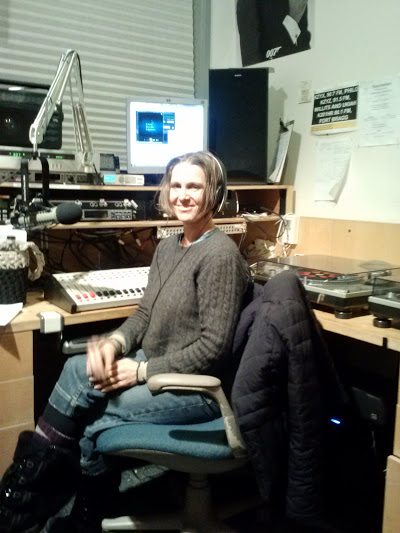
Did you catch our interview on Women’s Voices on KZYX? If you missed it, no worries, we have the link for you here:

Blake Moore was kind enough to talk to us about our locavore ways. We had a blast, her show is really fun and I hope everyone gives her a listen. We’ll be back on before this all is over for sure.

Rock. Star.
Rock. Star.

0225132001

I know we’ve been a bit lax blogging lately- Spring has started and my life has been consumed by the greenhouse and by babies! Promise we’ll be back on the horse in no time. For better or worse, our Facebook page is where the action is! Check it out for gratuitous baby goat pics, mussel harvests, aioli making, and my big mastiff Bucket snuggling baby chicks. http://www.facebook.com/eatmendocino

Loves,

Gowan

Orange marmalade in the face of adversity

Its been a busy week guys.

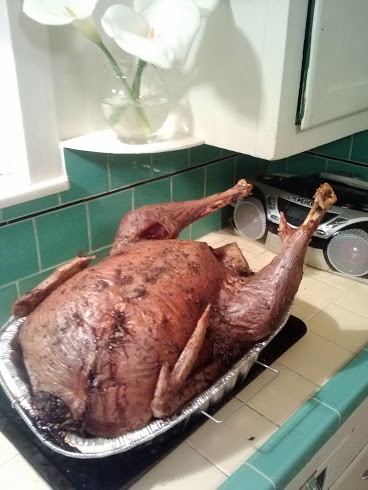
Between emergency turkey roasting, filming with Parents and Friend’s and Art Explorers in the garden, Americorp work days, and newborn Nubians, (I promise pictures and blogging will happen when I’m more alive) it’s been a lot of work out in the cold. My household is sick. It’s been going around. Its been forever since I had a bug, but I’m all foggy and have a scratchy throat. The Kid is sick, and so is The Boyfriend.

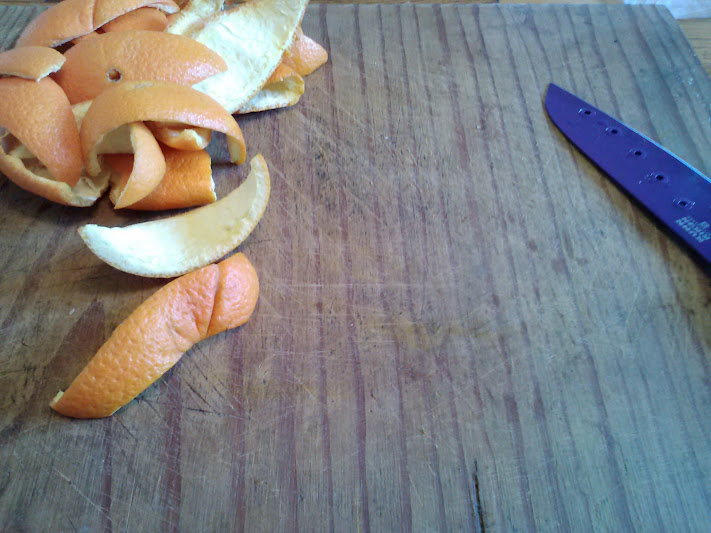
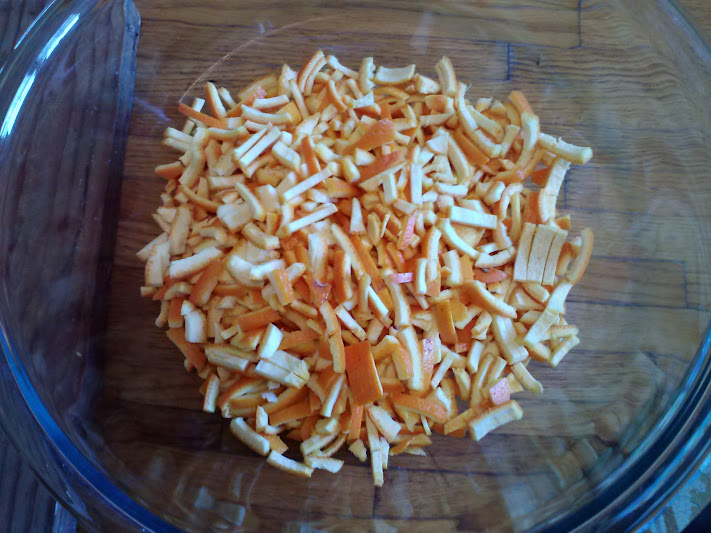
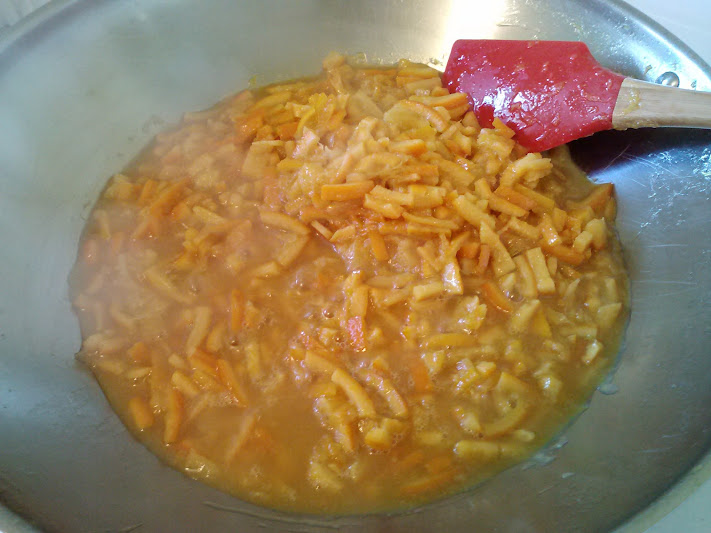
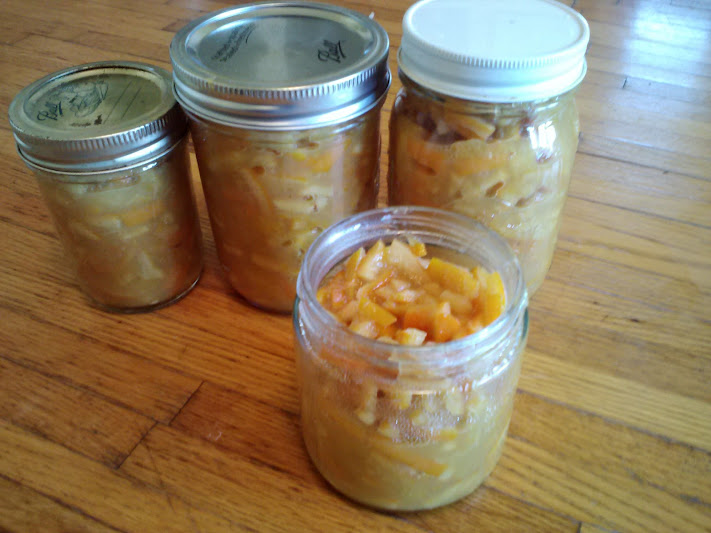
We’ve been saving our orange peels in the fridge in a tupperware for a few weeks- since Sarah found local oranges, of all beautiful things, in Ukiah. Citrus is so precious I couldn’t bring myself to throw them away. I first thought I might candy them like my grandma used to, but honey works so differently than sugar I wasn’t sure it would work, and thought it might just make napalm on my baking sheet.

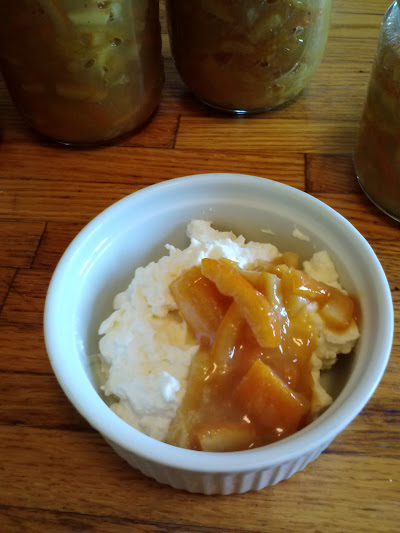
Then I remembered marmalade. I had made a nice fluffy farmer cheese, and had been eating it in tiny custard cups with honey because I felt too exhausted and gross to cook. The clean, bitter citrus taste is all I ever want when I’m sick, and I was feeling up to the task of sitting and cutting peel into bits, so I did. Initially I brought my laptop and watched the Lorax, but it made me too sad, so I had to watch Wallace and Gromit instead.

Once, I was hardcore.

But anyway.

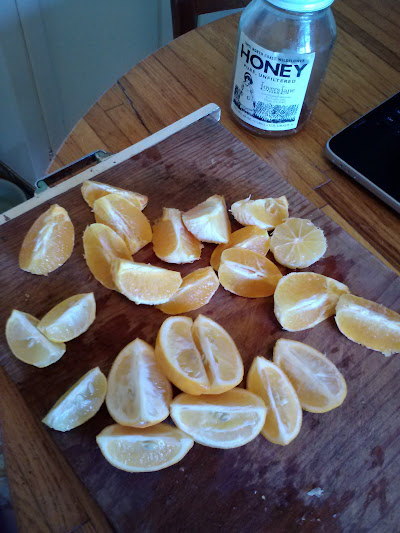
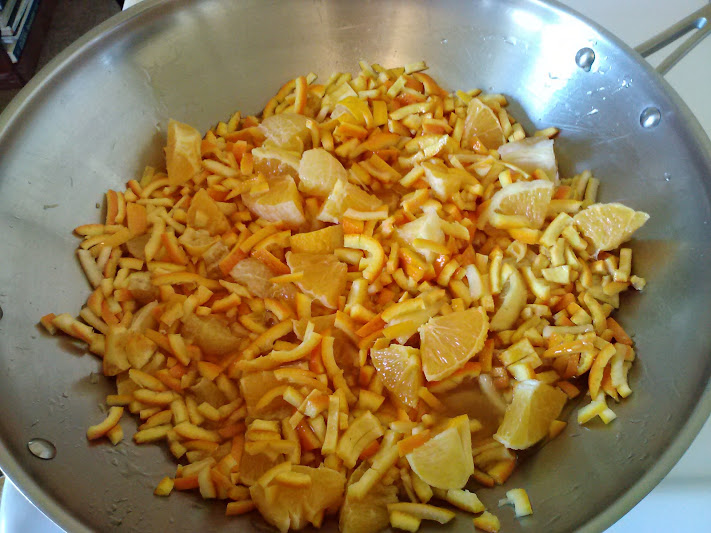
I also cubed some fruit- both a few oranges and some meyer lemons from Sarah’s parents’ tree that were getting a bit soft.

Some recipes call for the pith to be removed entirely, because it is a bit bitter, and some for the pith to be removed, wrapped in cheesecloth, and left in for the natural gelling effect it has. (its full of pectin, which occurs naturally in some fruits like quince and to a lesser extent apples, and is sold in powdered form for jelly making) I happen to like bitter marmalade, which is lucky because I was not in any way up for the removal or straining process.

I added about a cup on honey- which is a bit less than the usual amount of sugar. Sarah’s lemon sauce taught us a lot about replacing sugar with honey- its sweeter, and thinner. Hence the sauce instead of curd. Since I left the pith in I did add a fair amount.

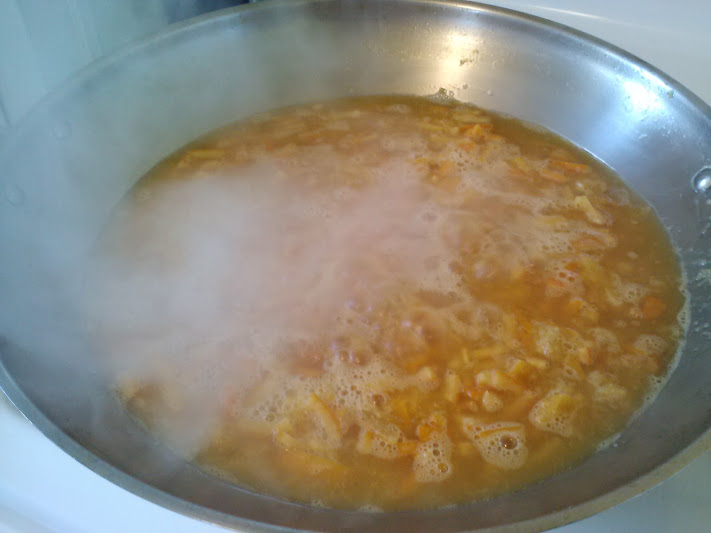
The oranges cooked down for a long time- over an hour. I added little bits of water as I went to keep it simmering. Eventually it began to gel a bit even though it was hot, and I figured that meant it was done.

      This stuff smells amazing even when you can’t really smell anything.

Spooned over the thick rich farmer cheese, its absolutely what I want today.

Hope you and yours are warm and keeping hydrated.

Loves,

-Gowan

Thanksgiving in February, Part 2

I’m still in Turkey-coma. There are gallons of soup to be made, meat to slice and freeze, (we only carved one side of the bird and still fed six people and loaded Sarah up with meat to take to Ukiah!) and a fleet of glass tupperware full of side dishes and drippings in the fridge.

It’s epic, in other words.

I left off yesterday with the bird in the oven and The Kid returning from her job to the house. Once she got home we sat in the kitchen and talked for a while, then steamed potatoes to make mashed potatoes later, chopped veggies to steam in apple juice, and made a salad.

0219132130c
All the produce grown by me and harvested the same day, potatoes grown by John.


0219132109
Kiwis and radishes are amazing in salads, I promise.

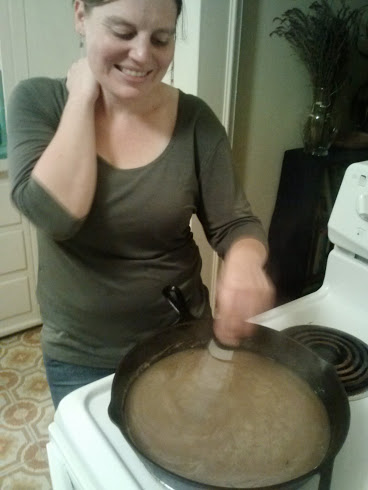
The kid mashed potatoes, and her boyfriend stopped by. I had run into one of my amazing garden volunteers in the store earlier when I was hunting down a roasting pan big enough for Mr. Tom. She was leaving in a week to be an intern on a farm up north, and I suggested she stop by. She did, and brought local wine, and whisked gravy like a pro. Felicia, you are a trooper and a joy wherever you happen to be, and the farm is lucky to have you!

0219132149aGravy is serious business in my family. Serious, serious business. I think we did my mom proud on this one.

I’m getting a bit ahead of myself though- before we could make gravy we had to get the bird out of the oven.

We don’t have pictures of this process, because we were focusing all our energy on trying not to die.

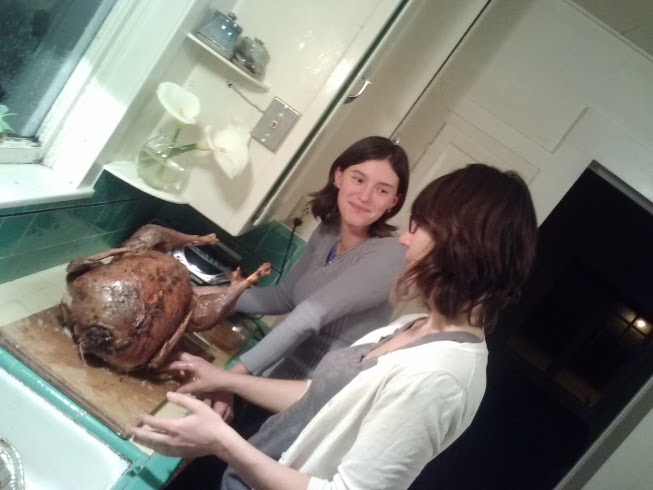
We ended up doing an odd, double pan thing, because the largest “Eco-pan” roasting pan Harvest stocks didn’t quite hold the bird, and even without adding any liquid the juices were clearly more than what the poor roasting pan could handle. We layered it with a large baking pan. The bird was hugely heavy. The Kid and I ended up each having to lift a side of the pan from the bottom. This resulted in some spilled juices and multiple superficial burns. We eventually got the thing onto the stove top only to find that the roasting pan was twisting under the weight and threatening to spill juices everywhere. Felicia saved us and stuck our cast iron underneath and I managed to hold it up and pour off the liquid.

Whew.

We had the bird out of the oven.

0219132120aTransferring it to the cutting board on the counter was another two-person job- Sarah and I bent the front of the pan into a kind of ramp, placed the cutting board in the lower level of the sink, and basically skated the turkey into place, then lifted the cutting board back onto the counter.

0219132130a

0219132139a
SUCCESS


We felt glorious.

0219132205b
Scooping out the stuffing was one of the singular best things I have ever done.
0219132213
Primal beast time.

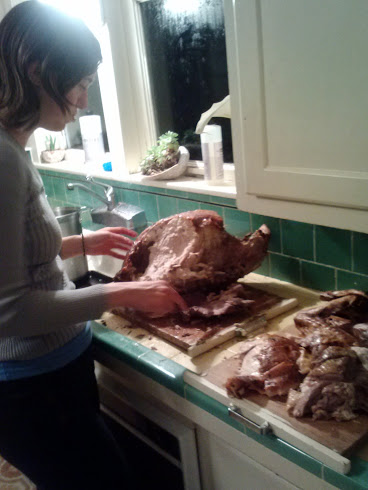
I felt like a Viking Queen. This massive beast was laid out in all its unknowable, divine, infinite glory. I almost never eat meat, I was vegan for several years, and never ate commercially raised meat really ever. I rarely crave it and don’t miss it when I do without it. But this turkey made every single cell in my body vibrate. With my tiny paring knife, since I don’t even own a carving knife, I sawed off huge moist chunks.

We set the table.

With perfect timing, my poor mostly vegan boyfriend walked in from his EMT class to find a kitchen full of people and an immense turkey splayed out on every surface. Being a total champion, he took it all in stride and accepted the potatoes and greens that we refrained from dumping turkey fat on for his sake.


0219132226a
Glorious.

I, on the other hand, dumped turkey fat on everything.

It was amazing.

Loves,

-Gowan